


Alright, let’s grab a coffee and talk about something that’s been buzzing louder than a turbo-hybrid engine on the pit straight: the F1 2026 regulations . You’ve probably seen the headlines, heard the whispers from the paddocks, maybe even caught a frustrated soundbite from a certain three-time world champion. The question isn’t just “What are the new rules?” but “Why are so many smart people in Formula 1 looking a bit… twitchy?” Is it full-blown panic, or just the usual pre-season jitters magnified by a monumental shift in philosophy? Let’s peel back the layers and understand why this particular set of changes has everyone, from engineers to enthusiasts, holding their breath.

The Heart of the Matter | Why These Regulations Are Different

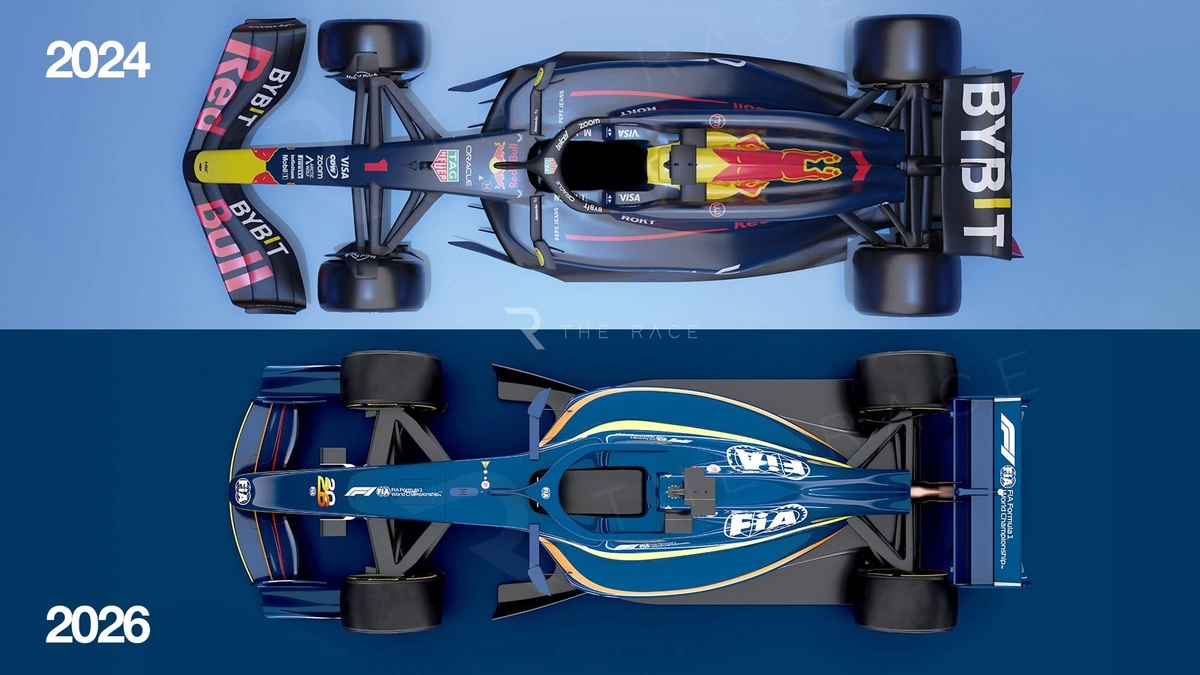
Here’s the thing: F1 is no stranger to regulation overhauls. Every few years, the rulebook gets a spring clean, aiming for better racing, more relevance, or a shake-up of the pecking order. But 2026 feels… different. The core shift isn’t just incremental; it’s foundational. We’re talking about a completely revamped power unit – more electric power, less reliance on the internal combustion engine (ICE), and crucially, the abolition of the MGU-H . Remember that tiny, complex, and incredibly efficient component that recovers energy from the turbo? Gone. And in its place? A significant boost in battery power, pushing the electric output to around 350kW (that’s nearly 470 horsepower!) alongside a still potent ICE running on 100% sustainable fuels F1 .
Now, why does this matter so much? Well, the MGU-H, while brilliant, was also unbelievably complex and expensive, creating a huge barrier to entry for new manufacturers. Ditching it is meant to attract new blood, like Audi, and level the playing field. But this newfound emphasis on electric power has a domino effect on the entire car, and this is where the panic (or at least, the deep concern) starts to brew. Imagine trying to drive a car with a massive surge of electric power that then tapers off dramatically at high speeds, forcing a reliance on energy harvesting. It’s like having a rocket booster for half a lap and then suddenly realizing you’re running on fumes. This dynamic fundamentally changes how a car is designed, driven, and raced, leading to significant new F1 engine rules that impact everything.
Aerodynamics vs. Power | The Uncomfortable Compromise
So, we have these new, powerful but very different power units. What’s the logical next step for the FIA ? To simplify the aerodynamics F1 2026 package. The idea is to make the cars smaller, lighter (though “lighter” in F1 is always a relative term, isn’t it?), and with less drag, so they can achieve good top speeds despite the power unit’s unique delivery curve. The current concept includes adjustable or ‘active aero’ elements – things like movable front and rear wings – to reduce drag on straights and increase downforce in corners. Sounds brilliant on paper, right?
But here’s the rub, and why teams are sweating. Reducing downforce significantly means the cars will be inherently slower through corners. And while the new power units deliver a punch, they don’t have the sustained high-speed grunt of current engines without continuous energy harvesting. This creates a delicate, almost contradictory, balance. Teams are facing immense power unit challenges trying to design a car that is aerodynamically efficient enough to compensate for the engine’s characteristics, yet still generates enough grip to be fast and enjoyable to drive. It’s like being told to build a supercar that’s also incredibly fuel-efficient but can only use a specific, quirky type of engine. The engineers I’ve spoken with say it’s a tightrope walk, where any misstep could lead to a car that’s either lightning-fast on the straight but a pig in the corners, or vice-versa.
One significant area of concern is braking zones and energy recovery. With more reliance on electric power and therefore more energy recovery, braking points might shift dramatically. This is crucial because, as we saw with the introduction of hybrid power in 2014, the balance between mechanical braking and brake-by-wire (where electrical harvesting also contributes to slowing the car) can be incredibly tricky for drivers to manage consistently. Just ask any engineer; it’s a massive headache.
Driver Concerns and the “Awkward” Car
When the greatest drivers in the world start using words like “awkward” and “dangerous” to describe cars that are still two years away, it’s usually a pretty good indicator that there’s genuine concern. Max Verstappen, never one to mince words, has been particularly vocal, suggesting the cars might be “weird” to drive and could make racing less enjoyable. Lewis Hamilton has also chimed in, highlighting the potential for less enjoyable racing due to the heavy reliance on drag reduction systems.
Why does their feedback matter so much? Because they are the ultimate arbiters of how these machines perform at the limit. If the cars are incredibly difficult to drive, requiring complex energy management and constant adjustments to active aero, it could detract from the pure art of racing. Think about it: if drivers are constantly fiddling with buttons and switches just to keep the car on track, are they truly pushing the limits, or are they just managing a complex system? The driver concerns 2026 F1 aren’t just about speed; they’re about the integrity of the racing spectacle. The risk is that the cars become so aerodynamically sensitive and reliant on energy management that drivers are forced into a singular “optimal” driving style, reducing variety and skill expression. It’s a bit like making all chefs cook with only one type of incredibly temperamental oven – some might adapt, but the creative freedom is gone. This is also why many are hoping for adjustments to keep the racing pure.
The Ripple Effect | Team Strategies and Development Hurdles
The stakes couldn’t be higher for the teams. We’re not just talking about minor tweaks; this is a complete redesign from the ground up. Mercedes, Ferrari, Red Bull (with Red Bull Powertrains and Ford), Alpine, and newcomers like Audi are all pouring billions into developing their power units and chassis. The early struggles and unknowns are creating immense F1 team reactions 2026 .
Consider Red Bull. They’re building their own engine for the first time with Ford, a monumental undertaking that’s already behind schedule compared to established manufacturers. If the regulations turn out to be fundamentally flawed, or if one manufacturer nails an interpretation early, the competitive landscape could be drastically altered for years. This is why every test, every simulation, every piece of feedback is being scrutinized with surgical precision. The cost of getting it wrong isn’t just a season; it could be half a decade of playing catch-up. It’s a massive gamble, and no team wants to find themselves caught flat-footed. We’ve seen how quickly fortunes can change in F1, and these regulations are a prime opportunity for a seismic shift. For those interested in the cutting edge of automotive technology, perhaps even the progression of electric cars , these shifts are always fascinating.
There’s also the crucial role of the FIA. They’ve been receiving feedback from teams and drivers, and it seems they are listening. Changes to the chassis regulations are reportedly being discussed to help mitigate some of the aerodynamic issues, possibly by allowing more downforce in certain areas or adjusting weight distribution rules. This willingness to adapt, even at this relatively late stage, suggests that the concerns are indeed real and being taken seriously. It’s a high-stakes poker game, where the chips are measured in lap times and championship points.
So, Is it Panic Stations? Our Verdict
So, back to the central question: should F1 be panicking? My verdict, sitting here with my metaphorical coffee, is probably not “panic” in the sense of total disarray, but certainly a very, very serious level of concern that demands swift action and potential adjustments. What we’re seeing isn’t hysteria; it’s the highly rational anxiety of engineers and drivers facing an unprecedented challenge. The goals – increased relevance, sustainability, and attraction of new manufacturers – are noble and necessary for F1’s future. But the implementation seems to have created some thorny side effects.
The F1 2026 regulations are a massive step into the unknown. The combination of significantly altered power units and a simplified, yet complex, active aero package means the cars are going to be fundamentally different. The initial feedback from simulations and drivers is a warning signal, not a death knell. The good news is that the FIA appears to be engaged and willing to refine the rules before 2026. This isn’t just about making faster cars; it’s about preserving the spectacle, ensuring driver safety, and maintaining the integrity of F1 as the pinnacle of motorsport. It’s a delicate dance, but one that Formula 1 has historically managed to navigate, often learning its best lessons from the brink. So, while the coffee might be getting cold, the discussion around 2026 is definitely heating up, and we’re all watching to see what compromises and innovations emerge.
Frequently Asked Questions About F1 2026 Cars
What are the main changes for F1 2026?
The biggest shifts are in the power units , which will have a much higher electrical component (up to 350kW), run on 100% sustainable fuels, and no longer feature the MGU-H. The cars will also feature simplified aerodynamics with active elements, aiming for lighter and more efficient designs. This overhaul affects nearly every aspect of the vehicle’s engineering and performance.
Why are drivers worried about the new cars?
Drivers, including Max Verstappen and Lewis Hamilton, have expressed driver concerns 2026 F1 mainly due to the potential for “awkward” driving dynamics. The combination of less downforce, a unique power delivery curve, and heavy reliance on active aero for drag reduction could make the cars less intuitive and potentially less enjoyable to push to the limit. They fear it might lead to cars that are slow in corners and tricky to manage.
Will the cars be slower in 2026?
That’s the million-dollar question! While the regulations aim for efficiency and sustainability, there’s concern that the initial designs, particularly with the new aerodynamics F1 2026 and power unit characteristics, might result in slower lap times, especially in corners. However, F1 engineering always finds a way, and ongoing development, alongside potential rule adjustments, will likely see speeds increase over time.
What is active aerodynamics in the context of F1 2026?
Active aerodynamics refers to parts of the car’s bodywork, like the front and rear wings, that can move and adjust during a lap. For 2026, these are intended to reduce drag on straights for higher top speeds and then increase downforce in corners for better grip. This system is a critical component in balancing the demands of the new power unit challenges with aerodynamic efficiency. For a broader perspective on vehicle dynamics and design, sometimes it’s interesting to consider bikes vs cars in terms of how different forms of transport tackle speed and efficiency. You can find more comprehensive technical explanations on official FIA documents .
How will sustainable fuels impact performance?
The shift to 100% sustainable fuels F1 is a significant environmental step. While these fuels are designed to be carbon-neutral, their chemical properties might initially present different combustion challenges compared to traditional fossil fuels. This could affect engine design and performance mapping, but manufacturers are working hard to ensure minimal impact on raw power, focusing more on efficiency and environmental benefits rather than purely chasing top-end speed.
Who is developing the new engines for 2026?
Several manufacturers are confirmed to be developing the 2026 power units . These include existing players like Ferrari, Mercedes, and Renault (Alpine), as well as Red Bull Powertrains (partnered with Ford), and the exciting new entry from Audi. Porsche had initially shown interest but eventually pulled out. Each manufacturer faces unique power unit challenges in meeting the new technical specifications.


