

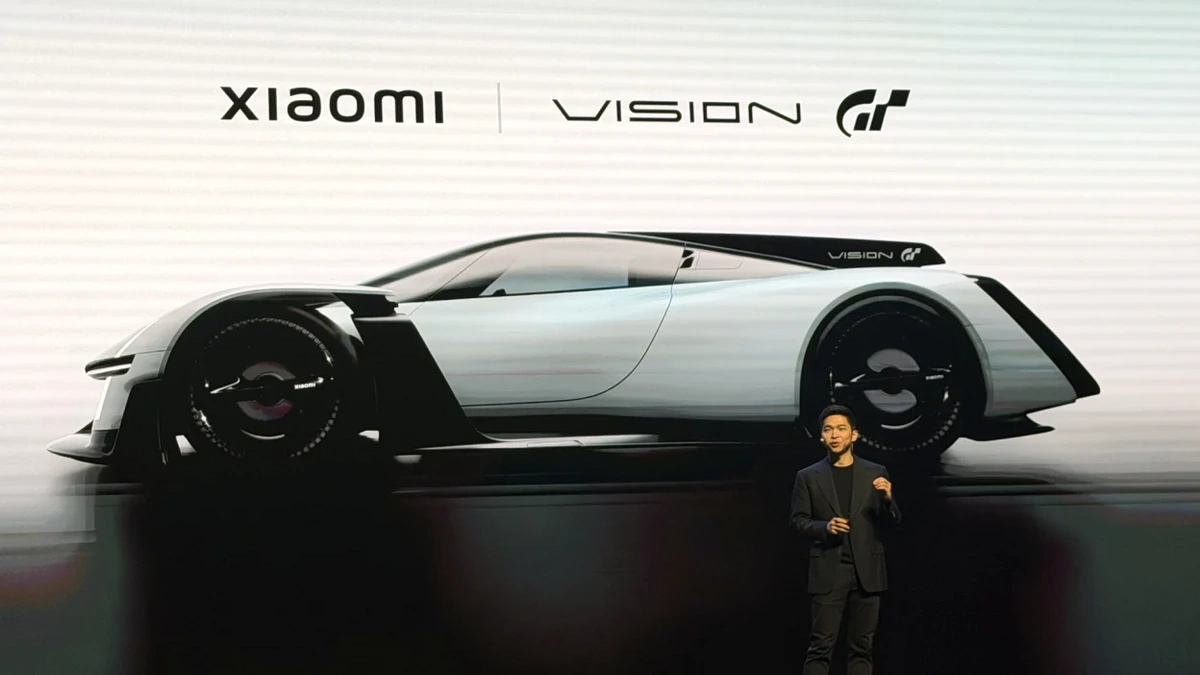
Alright, let’s grab a virtual coffee and talk about something truly wild in the automotive world. You’ve probably seen the headlines, maybe even a blurry render: Xiaomi , the tech giant famous for everything from phones to rice cookers, has unveiled a new hyper car concept. But it’s not the horsepower or the top speed that’s got everyone buzzing. Oh no. It’s the cockpit. And let me tell you, it’s arguably the strangest cockpit we’ve ever laid eyes on.

Now, I know what you’re thinking: “Another outlandish concept car that will never see the light of day.” And you might be right. But here’s the thing, as someone who spends far too much time dissecting automotive design trends and the silent battles for future market share, this isn’t just about a quirky design choice. This isn’t a designer having a fever dream. There’s a profound ‘why’ behind this seemingly bizarre interior, and understanding it gives us a peek into the very soul of future mobility and driver experience innovation . This isn’t just news; it’s a signal.
My goal today isn’t just to gawk at the oddity. It’s to unravel the deeper questions: Why would Xiaomi, a company known for user-friendly tech, create something so unconventional? What does it tell us about the future of futuristic car interiors ? And what implications does this hyper car concept have for how we’ll interact with our vehicles, especially in the burgeoning world of electric vehicle cockpits ?
Beyond the Familiar | What Makes This Cockpit So Strange?

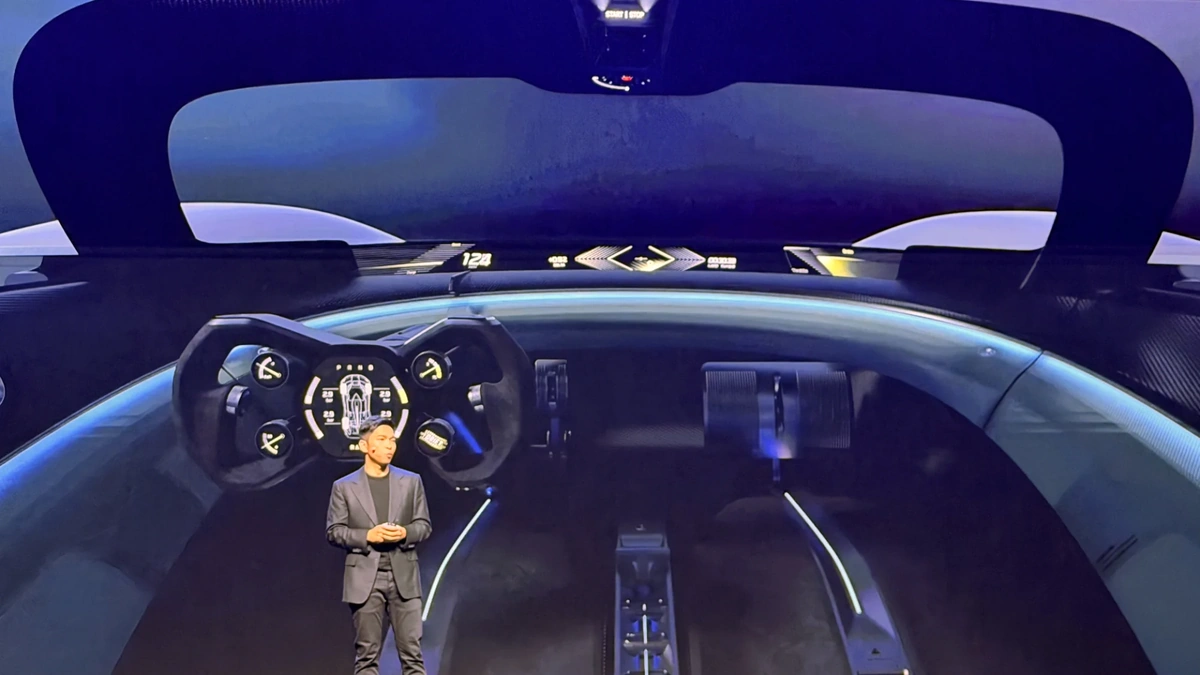
When you first glance at Xiaomi’s concept cockpit, the immediate reaction is often a mix of confusion and intrigue. Where’s the traditional steering wheel? Why are the controls laid out like that? It challenges almost every convention we hold dear about a car’s interior. We’re talking about an aesthetic that seems to have leaped straight out of a sci-fi movie, foregoing familiar buttons and dials for what appears to be a minimalist, almost ethereal control scheme. This isn’t just a slight deviation; it’s a fundamental reimagining.
To put it mildly, it makes the interiors of even cutting-edge production EVs, like their own rather sleek Xiaomi EV SU7 , look positively vintage. While the SU7 has a large central screen and a relatively clean design, this concept takes it to another level entirely. It’s less about providing information and more about creating an immersive environment. We see an almost complete absence of physical switchgear, replaced by haptic feedback surfaces, advanced projection displays, and what looks like a radically re-envisioned steering interface – if you can even call it a wheel anymore. The sense of being enveloped, rather than merely seated, is palpable. This radical departure hints at a future where the car isn’t just transportation, but an extension of our digital lives, pushing the boundaries of what concept car technology can achieve.
The materials, too, seem to stray from automotive norms, favoring textures and finishes that feel more akin to high-end consumer electronics or bespoke furniture than a car interior. It’s designed to provoke a reaction, to force us to question our preconceived notions of what a car should be. And in that provocation, there’s a genius. It’s a deliberate move to spark conversation, to plant a flag in the ground for a particular vision of the future, daring competitors to respond.
The “Why” Behind the Wild | Xiaomi’s Design Philosophy Unpacked
So, why would Xiaomi go this far? Let’s unpack the ‘why’. Xiaomi isn’t just another car company; they’re a tech company first, and that informs everything they do. Their bread and butter is creating seamless user experiences across a vast ecosystem of devices. They understand human-machine interface (HMI) in a way many traditional automakers are only just beginning to grasp. This concept cockpit is less about driving and more about interaction, about leveraging their expertise in smart devices to create a mobile living space.
Consider the broader context of automotive design trends . We’re seeing a massive shift from driver-centric cockpits to passenger-centric cabins, especially with the march towards autonomous driving. While this concept doesn’t explicitly scream ‘fully autonomous,’ its interior design certainly anticipates a future where the driver’s role is radically altered. If the car can drive itself, what does the ‘driver’ need to do? Perhaps less physical control and more experiential engagement. Xiaomi is essentially asking: If we strip away the traditional functions, what is the most engaging, intelligent, and comfortable way to inhabit a vehicle?
Their approach here seems to be about blurring the lines between a car’s interior and a high-tech lounge or a personalized digital hub. It’s a statement that their vision for mobility isn’t merely about getting from A to B, but about maximizing the quality and utility of the time spent in between. They’re leveraging their brand identity – accessible innovation – and applying it to a segment that traditionally relies on heritage and performance. This innovative design is a bold declaration of intent, signaling that Xiaomi isn’t afraid to challenge incumbents with fresh ideas, even if those ideas appear utterly alien at first glance.
Driving the Future | Implications for the Driver Experience
Let’s talk about the implications. If this radically different cockpit were to become a reality, even in a diluted form, it would fundamentally alter the driver experience . Imagine a world where the tactile feedback of switches is replaced by intuitive gestures, where information is projected dynamically onto surfaces, adapting to your needs in real-time. This isn’t just about aesthetics; it’s about a paradigm shift in how we perceive control and comfort.
The move towards more integrated and immersive electric vehicle cockpits is already underway. Most EVs prioritize digital screens and minimalist layouts, but Xiaomi’s concept pushes this philosophy to its extreme. It suggests a future where the physical act of driving might be secondary to the digital environment within the car. Could this mean a future where our cars feel more like personalized pods, capable of transforming their interior ambiance and functionality at the touch of a thought? The strange design, then, isn’t just strange for the sake of it; it’s strange because it’s built for a different future of mobility. It envisions a seamless flow between our digital lives and our automotive journeys, where the car adapts to us, rather than the other way around.
Of course, there are practical challenges. Human psychology and learned behaviors are hard to reprogram. Drivers are accustomed to certain controls, certain sensations. But progress often looks clumsy at first. Think about the first touchscreen phones – clunky, unresponsive, and met with skepticism. Now, they’re ubiquitous. The strange cockpit, while extreme, is a thought experiment in progress, pushing the boundaries of what’s possible and challenging us to reconsider what we value in a car’s interior. Speaking of challenging ideas, sometimes the biggest innovations come from unexpected places, even from situations where people are dealing with critical medical issues impacting driving , which highlights the importance of robust and intuitive safety features and human-machine interaction in any vehicle, futuristic or otherwise.
The Road Ahead | Will This Concept See Production?
Now for the million-dollar question: will we ever see a car on the road with a cockpit quite this strange? Honestly? Probably not in its current form. Concept cars, especially hyper car concepts, are often exaggerated visions designed to test ideas, gauge public reaction, and showcase technological prowess. They are a brand’s creative playground, a canvas for demonstrating ambition and direction, rather than an immediate blueprint for production.
However, that doesn’t mean this concept is irrelevant. Far from it. What we’re seeing here are seeds being planted. Elements of this futuristic car interiors concept – the advanced HMI, the minimalist control schemes, the focus on ambient experience – are highly likely to trickle down into future Xiaomi production models, and indeed, into the wider automotive industry. Think of it as a radical prototype that will inform evolutionary steps. It tells us where Xiaomi’s head is at, their long-term vision for future cars , and their commitment to pushing the envelope in an increasingly competitive electric vehicle market.
It’s a powerful statement from a company that’s relatively new to the automotive game, but old hands at disruption. By presenting such an audacious design, Xiaomi is not just building cars; they’re trying to build the future of mobility, piece by strange, fascinating piece. So, while you might not be driving this exact hyper car concept next year, be assured that its influence will likely be felt in the cars of tomorrow.
Frequently Asked Questions About Xiaomi’s Concept Cockpit
Why are concept cars often so extreme?
Concept cars serve as design studies and technology showcases. They allow designers and engineers to experiment with radical ideas without the constraints of mass production, cost, or regulatory hurdles. Their extremism helps generate buzz and explore potential future directions for automotive design .
How does this compare to other futuristic car interiors?
While many futuristic car interiors from traditional brands focus on larger screens and luxury materials, Xiaomi’s concept leans heavily into minimal physical controls and seamless digital integration, pushing the boundaries of the human-machine interface (HMI) more aggressively than many current offerings.
What’s the biggest challenge for electric vehicle cockpits going forward?
One of the biggest challenges for electric vehicle cockpits is balancing the desire for sleek, minimalist design with the need for intuitive and safe driver interaction. As autonomous features grow, the challenge will be to create flexible interiors that can transition smoothly between active driving and relaxed passenger modes, without overwhelming the user.
Where can I find more about Xiaomi’s automotive ventures, like the Xiaomi EV SU7?
For official information and updates on Xiaomi’s automotive division, including details on their production models like the Xiaomi EV SU7 , it’s best to check Xiaomi’s official global website or their dedicated automotive news sections. You can usually find press releases and product specifications there.


